Protecting your home or business? Mtech Technologies offers CCTV cameras, NVRs, access control and alarms from top brands. Complete security solutions for peace of mind.
Fire-resistant cable designed to maintain performance during fire emergencies
Construction:
Conductor:
Made from copper or tinned copper for optimal conductivity
Stranded or solid conductor options available for flexibility and strength
Insulation:
Insulated with fire-resistant materials such as LSZH (Low Smoke Zero Halogen) or PVC (Polyvinyl Chloride) for flame retardancy
Temperature Rating: Typically rated for continuous operation in temperatures ranging from -20°C to 90°C
Jacket:
Fire-resistant outer sheath to protect internal conductors from fire exposure and mechanical damage
LSZH, PVC, or other fire-resistant compounds for reduced smoke emissions and fire spread
Shielding:
May include aluminum foil or braided copper shielding for enhanced protection against electromagnetic interference (EMI) and signal degradation
Fire Resistance Standards:
Complies with international fire resistance standards such as IEC 60331, BS 6387, EN 50200, and UL 1424
Rated for FIRE RESISTANCE (850°C) or more, depending on the specific type, to ensure functionality during fire scenarios
Applications:
Emergency circuits that need to remain operational in fire conditions, including fire alarm systems, emergency lighting, safety systems, and communication cables
Ideal for high-risk environments such as industrial plants, commercial buildings, hospitals, and power stations
Commonly used in fire control panels, safety signaling systems, and security alarms
Performance Features:
Flame Retardant: Cables are designed to self-extinguish, preventing the spread of fire along the cable path
Non-toxic Smoke: Cables, especially those with LSZH insulation, are designed to emit minimal smoke and toxic fumes in case of fire
Impact Resistance: Designed to withstand mechanical impact and abrasion during fire conditions
Voltage Rating:
Typically rated for 300/500V or 450/750V (depending on the model and intended use)
Cable Variants:
Available in various core counts (e.g., 2-core, 3-core, 4-core, etc.) for flexibility in different installations
Options for armored or non-armored cables, providing additional protection against physical damage
Fire Resistance Duration:
Designed to maintain circuit integrity for a specified period during fire exposure, such as 30 minutes, 60 minutes, or up to 120 minutes, depending on the specific standard and rating
Certification and Compliance:
CE Marked for European safety standards
UL-listed for safety in the United States
Meets RoHS (Restriction of Hazardous Substances) regulations
Cable Color Coding:
Cables are typically available with standard color coding for easy identification, such as red, black, blue, yellow, or green for different circuits
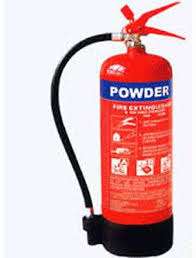
Dry Powder fire extinguisher, suitable for Class A (solid materials), Class B (flammable liquids), Class C (flammable gases), and electrical fires (Class E)
Capacity:
9 Kg of dry powder agent
Extinguishing Agent:
Multi-purpose ABC dry powder (typically monoammonium phosphate) for effective suppression of multiple types of fires
Non-toxic and environmentally friendly powder formulation
Fire Ratings:
EN3 Rating: Typically 21A (solid combustibles), 113B (flammable liquids), C (flammable gases), and Electrical Class E (safe for use on electrical fires up to 1000V)
Ideal for industrial and commercial settings
Operating Pressure:
14 bar at 20°C (typical operating pressure)
Discharge Time:
Approximately 15-20 seconds for complete discharge
Range of Discharge:
5-6 meters (effective for both small and medium-sized fires)
Discharge Mechanism:
Pressure-activated valve with a easy-to-use squeeze grip handle and nozzle for controlled discharge of powder
Powerful discharge designed to cover a large area quickly
Cylinder Construction:
Steel cylinder with a corrosion-resistant finish (red) for durability and long-term performance
Impact-resistant construction designed to withstand harsh environments
Temperature Range:
Designed for use in environments with a temperature range of -20°C to 60°C (safe operating temperature)
Dimensions:
Height: Approximately 600-700 mm
Diameter:150-200 mm
Weight:Approx. 11-12 kg (full weight with powder)
Certifications:
Conforms to BS EN 3-7 (European standard for portable fire extinguishers)
CE certified for quality and safety
Maintenance:
Requires annual servicing for refilling, inspection, and pressure testing
Easy-to-read pressure gauge for simple monitoring of pressure levels
Wireless Connectivity: Utilizes Wi-Fi or Zigbee to connect to home or office networks for remote monitoring and alerts
Integration: Compatible with smart home systems (e.g., Amazon Alexa, Google Assistant) and home security hubs
Detection Technology:
Smoke Detection Method: Typically uses photoelectric or ionization sensing technology for quick and accurate detection of smoke
Sensitivity: Adjustable sensitivity levels to minimize false alarms while ensuring effective detection in case of fire
Power Supply:
Battery-Powered: Powered by long-life lithium batteries (usually 5-10 years of battery life)
Rechargeable Options: Some models include rechargeable batteries or power backup in case of power failure
Low Battery Indicator: Provides alerts when the battery level is low for timely replacement
Sound Output:
Audible Alarm: Emits a loud alarm (typically 85 dB at 3 meters) to alert occupants of potential danger
Test Button: A built-in test button to check functionality of the alarm and verify smoke detection system
Smart Features:
Mobile Alerts: Sends push notifications or alerts to mobile devices when smoke is detected
Multiple Detector Syncing: Allows multiple units to communicate with each other, triggering alarms throughout the premises if one detects smoke
Voice Alerts: Some models include voice alerts that indicate the type of danger (e.g., "Smoke detected" or "Fire alarm").
Mounting & Installation:
Easy Installation: Typically DIY installation with adhesive pads or screws, ideal for ceilings or walls
Mounting Type: Ceiling-mounted with a compact and sleek design to blend into any room décor
Wireless Range: Can typically cover areas up to 1000 square feet, depending on the signal strength and installation setup
Environmental Considerations:
Temperature Range: Operates within a temperature range of 0°C to 40°C (32°F to 104°F)
Humidity Range: Functions effectively within a humidity range of 0-90% RH (non-condensing)
Battery Life:
Battery Life: Typically ranges from 5 to 10 years, depending on the battery type and the model
Power Consumption:Low power consumption for long-lasting operation
Certification and Standards:
Meets international safety standards such as UL 217, EN 14604, or NFPA 72
CE or FCC certified for safety and reliability
Indicators and Features:
Visual Indicators: LED indicators to show system status (e.g., normal operation, smoke detection, low battery)
Test/Reset Function: Allows the user to test the detector or reset it in case of false alarms
Dimensions & Design:
Size: Typically around 4-5 inches in diameter and 1.5-2 inches in height
Weight: Approximately 200-300 grams, lightweight and compact for easy installation
Design: Modern, sleek, and unobtrusive, available in white, black, or other neutral colors
Warranty:
Typically includes a 1-5 year warranty from the manufacturer
The Wireless Smoke Detector offers a reliable and modern approach to home or office fire safety. With its integration into smart home systems, long battery life, and effective smoke detection technology, it ensures peace of mind and immediate alerts in the event of a fire, all while being easy to install and maintain.
4o mini
You said:
write a description of the above device
ChatGPT said:
ChatGPT
The Wireless Smoke Detector is an advanced safety device designed to provide early warning in the event of a fire, ensuring the safety of your home or office. Utilizing photoelectric or ionization technology, it quickly detects smoke and triggers an audible alarm (typically 85 dB) to alert you to potential danger. Its wireless connectivity allows it to seamlessly integrate with smart home systems, sending real-time push notifications to your mobile devices when smoke is detected, ensuring you're informed even when you're away.
This smoke detector is powered by long-life lithium batteries that last between 5 to 10 years, with a low battery indicator to alert you when it's time to replace the batteries. Its compact, ceiling-mounted design makes installation quick and easy, while its wireless capabilities eliminate the need for complex wiring. Multiple units can be synced together, so when one unit detects smoke, all linked detectors will sound the alarm, providing a networked safety system throughout your home or office.
Additionally, some models include voice alerts that clearly state the type of hazard, such as "Smoke detected" or "Fire alarm," helping you identify the danger faster. With a temperature range of 0°C to 40°C and a humidity tolerance of up to 90% RH, this smoke detector is reliable in a variety of environments.
Certified to meet international safety standards, such as UL 217 and EN 14604, the Wireless Smoke Detector is a reliable and essential part of your fire safety plan, offering peace of mind with its modern features, easy installation, and long-lasting performance.
4o mini
You said:
'//
ChatGPT said:
ChatGPT
It seems like you entered "//". Could you clarify what you're referring to or how I can assist you further?
4o mini
You said:
9 Litres Foam Fire Extinguisher detailed specs in bullet form
ChatGPT said:
ChatGPT
9 Litres Foam Fire Extinguisher - Detailed Specifications
Type of Extinguisher:
Foam fire extinguisher for Class A (solid materials) and Class B (flammable liquids) fires
Capacity:
9 Litres of foam solution
Extinguishing Agent:
Aqueous Film-Forming Foam (AFFF)
Effective for tackling liquid fires such as oil, petrol, and paint, as well as solid combustibles like wood, paper, and textiles
Fire Ratings:
EN3 Rating: Typically 21A (solid combustibles) and 113B (flammable liquids)
Provides effective coverage for a range of fire risks in commercial, industrial, and residential environments
Operating Pressure:
14 bar at 20°C (typical operating pressure)
Discharge Time:
Approximately 40 seconds for full discharge
Range of Discharge:
3-4 meters (ideal for reaching medium to larger fire areas)
Discharge Mechanism:
Pressure-activated valve with an easy-to-operate lever
Foam discharge nozzle for effective foam application over fire surfaces
Cylinder Construction:
Steel cylinder with a corrosion-resistant finish for durability and long-term use
Red with clear labeling in compliance with international safety standards
Temperature Range:
Designed for use in environments with a temperature range from -20°C to 60°C (safe operating temperature)
Dimensions:
Height: Approximately 500-600 mm
Diameter:150-180 mm
Weight: Typically around 12-14 kg (full weight with foam)
Class of Fire: Suitable for Class B (liquids, oils, and flammable gases) and Class C (electrical fires).
Extinguishing Agent: Carbon Dioxide (CO2) gas.
Application: Ideal for use in commercial and industrial settings, especially where electrical or liquid-based fires are common.
Key Features:
Discharge Duration: Approximately 8-12 seconds.
Discharge Range: Up to 3-5 meters.
Discharge Pattern: Dense CO2 cloud to quickly displace oxygen and smother the fire.
Clean Agent: Leaves no residue, making it ideal for use on sensitive electrical equipment and valuable items.
Design & Construction:
Cylinder Material: High-strength steel or aluminum, resistant to corrosion.
Finish: Powder-coated for additional protection against environmental wear and tear.
Valve & Handle: Pressure valve and ergonomic handle for easy operation.
Pressure: Stored pressure type, pressurized with CO2 gas.
Safety Pin: Includes a safety pin to prevent accidental discharge.
Pressure Gauge: Equipped with a pressure gauge to show the operational status (indicating whether the extinguisher is fully charged).
Performance:
Fire Rating: Typically suitable for Class B and Class C fires, such as fires involving flammable liquids, gases, and electrical equipment.
Fire Extinguishing Capacity: Rapid suppression of electrical and liquid fires, with the ability to quickly reduce heat by displacing oxygen around the fire source.
Maintenance & Service:
Maintenance-Free: Requires only periodic inspection for optimal operation.
Rechargeable: Can be refilled and recharged after use by certified professionals.
Tamper Indicator: Equipped with a tamper-proof seal to indicate if the extinguisher has been used or tampered with.
Purpose: To detect, monitor, and signal alarms in case of fire or smoke in buildings or facilities.
Compatibility: Designed to work with various detection devices, including smoke detectors, heat detectors, manual call points, and alarms.
System Configuration:
Zones: Available in various configurations (e.g., 1 zone, 2 zones, 4 zones, 8 zones, 16 zones, etc.)
Addressable/Conventional: Can be either conventional (grouped detection devices) or addressable (each device has a unique address).
Panel Capacity: Range from small, localized systems to large, integrated systems with multiple zones.
Key Features:
Detection Devices Supported:
Smoke Detectors
Heat Detectors
Manual Call Points
Gas Detection Sensors
Flame Detectors
Status Indicators:
LED Display for zone status (Normal, Alarm, Fault, Trouble)
LCD Display: In some models, large screen LCD for easy event viewing, fault indications, and system status.
Control Features:
Alarm Output: Audible and visual alarms, typically through horns, bells, or strobe lights.
Manual Reset: Option to manually reset the system after an alarm event.
Test Function: Built-in test function for each zone and device.
Silence Alarm: Ability to mute the alarm while maintaining system monitoring.
Bypass Mode: Option to bypass a faulty zone for maintenance without triggering false alarms.
Inputs/Outputs:
Inputs:
Multiple zones for fire alarm monitoring.
External Inputs: Integration with emergency lighting, fire doors, or fire suppression systems.
Outputs:
Relay Outputs: For controlling external devices (e.g., fire suppression systems, elevators, ventilation control).
Auxiliary Outputs: Additional outputs for third-party devices or monitoring.
Communication Outputs:RS-485 or Ethernet ports for communication with external systems or monitoring centers.
Power & Battery:
Input Voltage: Typically 110V - 240V AC (depending on region).
Backup Power:12V DC rechargeable battery for emergency operation in case of power failure.
Battery Capacity: Sufficient to maintain operation for 24-48 hours during power failure, depending on panel model and load.
Battery Charging Circuit: Built-in charger for efficient battery maintenance and monitoring.
Connectivity & Integration:
Networking: Ability to network multiple panels for large or multi-building setups, including monitoring and control.
Remote Monitoring: Optional modules or built-in functionality for remote monitoring via Ethernet, Wi-Fi, or GPRS.
Integration with Fire Suppression Systems: Capable of integrating with fire suppression systems such as sprinklers, gas-based suppression, and emergency shutdown systems.
Alarms & Notifications:
Visual Indicators: LED lights or digital displays to show the status of the system (Normal, Alarm, Fault).
Audible Indicators: Built-in siren, bells, or optional connection to external sounders.
Event Log: Records and stores historical alarm events (up to 500 or more), including time stamps for each event for troubleshooting and audits.
Design & Enclosure:
Mounting: Wall-mounted or panel-mounted depending on system design.
Enclosure: Durable metal or ABS plastic enclosures, often with IP rating for environmental protection (IP54, IP65).
Size: Compact and scalable to suit different building sizes, with expandable modules in larger systems.
Security: Optional lockable enclosures to prevent unauthorized access.





 No products in the cart.